Solar Panel Defect Detection and Root Cause Analysis Competition Integrating Few-Shot Learning, Data Generation, and Multimodal Vision-Language Models (VLMs)
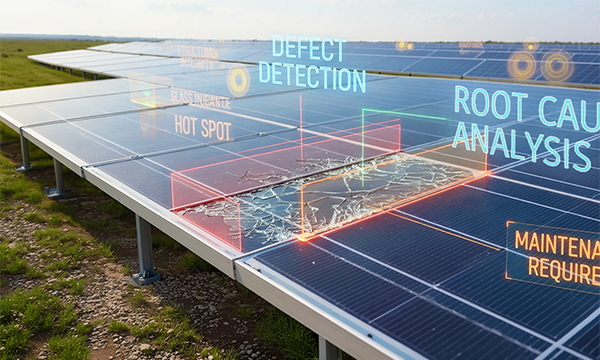
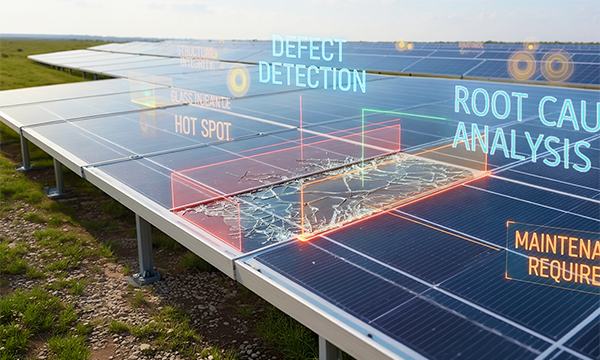
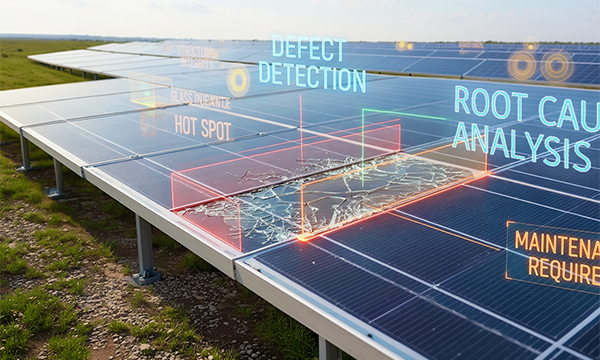
In response to global climate change and the energy transition, Taiwan has set net-zero emissions by 2050 as a national goal, and solar photovoltaics are also a key focus of renewable energy development. As installed capacity expands, solar panels are exposed over long periods to high temperatures, high humidity, windblown sand, and mechanical stress. Defects such as microcracks, hot spots, PID effects, encapsulation aging, and glass damage may reduce power generation efficiency, shorten equipment service life, and even pose safety risks.This competition is based on visible-light (RGB) and thermal infrared (Thermal IR) images. Participants are required to detect defect locations and generate textual descriptions of the root causes of the defects. Participants may employ few-shot learning, synthetic data generation, weather adaptation, and multimodal vision-language models to develop intelligent solar panel inspection systems with low data requirements, generalization capability, and interpretability.For inquiries, please contact: aicup2026.solardefect@gmail.com※Registration for this competition topic is expected to be conducted through the AI CUP registration system. The registration link and platform operation instructions shall be subject to the official announcement.EligibilityStudents who hold active student status in the Republic of China at the time of registration, including senior high school, vocational high school, college, university, and graduate students, may form teams to participate.Members of the general public may also participate and will be included in the overall ranking. Teams in the General Division are eligible only for certificates issued by the organizer and are not eligible for prize money or other material awards.A team composed entirely of students will be classified in the Student Division. A team with any non-student member will be classified in the General Division.Eligibility for prize money and other material awards, including GPU computing resources, is limited to teams whose members all hold active student status in the Republic of China at the time of registration. Supporting documentation must be provided when claiming the award.Competition Guidelines and Judging CriteriaThis competition is based on the solar panel visible-light and infrared image datasets provided by the organizer. Participating teams are required to develop an artificial intelligence system capable of performing defect localization and root cause text analysis. During the result-submission period, the system will display only Public evaluation scores and the Public Leaderboard for model development and performance adjustment. The final ranking will primarily be based on the Private Leaderboard evaluation result calculated from each team's last valid submission made before the result-submission deadline, together with a review of the source code and technical documentation.Competition ProcedureStage 1: Competition Registration and Dataset ReleaseRegistration will open on September 16, 2026. The organizer will make the Training set available on September 16, 2026, and the Testing set available on September 30, 2026, for participating teams to download. Teams may use the Training set for data preprocessing, data augmentation, model training, and parameter adjustment, and use the completed model to generate prediction results for the Testing set.Stage 2: Prediction Result Submission and Public LeaderboardParticipating teams must upload their Testing set prediction results to the online scoring and ranking system in the format specified by the organizer. During the result-submission period, the system will evaluate the Public score of each valid submission and display it on the Public Leaderboard. The Public Leaderboard will rank each team according to the Public evaluation score of its most recent valid submission, rather than its historical highest score, allowing teams to monitor model performance and make subsequent adjustments.During the result-submission period, each team may submit Testing set prediction results up to three times per calendar day. Public and Private evaluations use the same submission count, and no additional Testing set submission opportunities are provided for the Private evaluation.Stage 3: Final Evaluation and Private LeaderboardAfter the result-submission deadline, each team's last valid submission made before the deadline will automatically be designated as its final submission. The organizer will use that submission to calculate the Private evaluation score and the Private Leaderboard. Teams do not need to submit separate Private prediction results. Private Leaderboard results will be announced on the date listed in the event schedule.Stage 4: System Performance EvaluationParticipating systems must output defect locations and textual descriptions of defect root causes. The evaluation consists of the following two components:Defect Region Localization Accuracy: The overlap between the polygon regions predicted by the model and the manually annotated Ground Truth Polygons will be compared, and the localization score will be calculated based on Precision and Recall.BERTScore for Root Cause Analysis: The semantic similarity between the defect descriptions generated by the system and the reference answers will be compared to evaluate the quality of root cause analysis and textual explanations.The final score will be calculated by combining the above two metrics according to the scoring formula announced by the organizer.Stage 5: Score Announcement and Document ReviewThe organizer is expected to announce the Private Leaderboard results on December 9, 2026. Designated teams must submit their prediction model documentation and complete source code between December 9 and December 16, 2026. If teams have created or additionally used training data or resources, these must also be submitted or fully described.The submitted materials must include data preprocessing, model training, and inference programs, model weights, parameter settings, and the execution environment, enabling the organizer to verify the executability, reproducibility, and verifiability of the entries. Failure to complete execution or verification may affect the final ranking and award eligibility.Stage 6: Final Ranking DeterminationBased on the Private Leaderboard results and the review results of the programs, data, and technical documentation, the organizer will confirm that the entries comply with the competition rules and is expected to announce the final rankings on January 13, 2027.
2026-09-15T16:00:00+00:00 ~ 2027-01-13T15:59:59+00:00